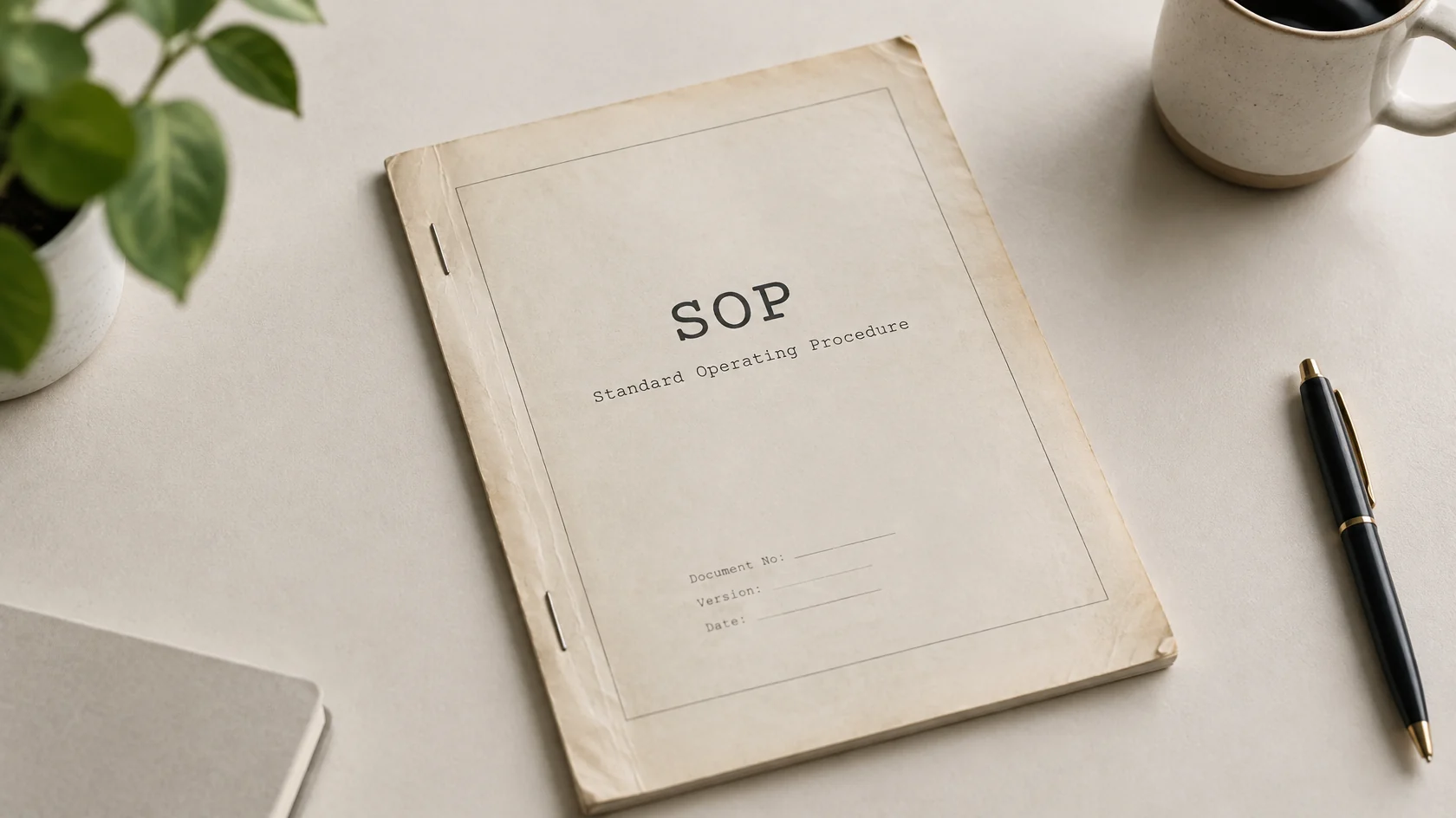
My first SOP was stapled together.
Back in the day, it was a little printed booklet that I made and stapled myself. Every step, written out on paper. Over time it evolved with technology. Now an SOP can be created with the help of capture tools, hold links and include tutorial videos and templates right where you need them.
The tools changed. The reason for writing it down never did. We all have days where we're tired, tasks we don't do very often, and sick days when someone else has to step in. When something is written out step by step, it takes the guesswork out of it and it keeps the work (and your branding) consistent no matter who does it.
So let's talk about how to write a real estate SOP that actually works on the days you need it most.
What a real estate SOP is (and what it isn't)
SOP stands for standard operating procedure. In plain words, it's the written "how we do this here" for one task. Uploading a new listing. Sending the "offer accepted" email. Setting up a new buyer in your CRM. Opening a deal file.
It isn't a policy manual, and it isn't a 40-page binder nobody opens. A good SOP covers one task, fits on a page or two, and can be followed by someone who has never done that task before.
Why your business needs them before you need them
Most agents know how to do everything in their business. The problem is that "how" lives in one place: their head.
That works right up until it doesn't. In a public r/realtors thread where an agent asked whether hiring a virtual assistant was worth it, one of the top replies said a VA can help, but you need "very clear and documented processes" or you'll end up frustrated with the results (snapshot of the r/realtors thread). I agree. Support works best when the support person isn't guessing.
The same goes for time off. CREA's advice to Realtors heading on vacation includes lining up a trusted agent and preparing a handoff document, with detailed notes on any transactions in the works (CREA Café). A set of SOPs makes that handoff a lot shorter to write, because most of it is already done.
And with the holidays coming, now is a good time to get a few written while things are a little quieter.
The recipe method: how to write one
I like to think of an SOP as a recipe. Someone who has never made the dish should be able to follow it and get the same result you would.
Step 1: Name it like a task, not a topic
"Listings" is a topic. "Upload a new listing to MLS and the website" is a task. If the title starts with a verb, you're on the right track.
Step 2: List the ingredients first
Before step one, list everything the person needs: logins (or where to find them), templates, checklists, forms, and who to email. Nothing slows a task down like hunting for a password halfway through.
Step 3: Write the method in numbered steps
One action per step. "Open the listing folder and check that the signed listing agreement is there" is one step. If a step has the word "and" in it more than once, split it.
Where a screenshot or a short video explains it better, add it. This is where the stapled booklet days feel very far away: a two-minute Loom of you clicking through your CRM can replace a full page of instructions.
Step 4: Say what "done" looks like
This is the step most people skip. End every SOP with what finished looks like. For example: file saved in the deal folder, client emailed, CRM updated, task marked complete. Without it, the person following your SOP doesn't know when to stop, or whether they missed something.
Step 5: Add your brand standards
This is the part that keeps your business looking like your business. Which email template? Which photo order? How do you sign off with clients? Write it in, so the work stays consistent whether you do it, your assistant does it, or your backup agent covers for a week.
Step 6: Do the taste test
Hand the SOP to someone who has never done the task and let them try it while you stay quiet. Every place they stop and ask a question is a gap. Fill it, then try again.
Which SOPs to write first
You don't need to document your whole business this month. Start with the tasks that hurt the most when they go wrong or when you're not there. A simple way to choose:
Tasks you do less than once a month (these are the ones everyone forgets)
Tasks that touch a deadline, like getting documents to the lawyer or lender on time
Tasks that face the client, like your welcome email or your offer-accepted message
Tasks you'd want covered if you were sick tomorrow
Pick two. Write them this week. That's a real start.
Keeping them alive
An SOP is only useful if it's current. A few habits that help:
Keep them in one shared place (a folder, your CRM, a tool like Notion), not in someone's inbox.
Put a "last updated" date at the top.
When a process changes, update the SOP the same day. If your brokerage changes a form or a rule changes, that's your cue.
Review them once or twice a year. The slower months are perfect for this.
You don't have to write them alone
Writing SOPs is one of those jobs that always gets pushed to "next week." It's not urgent until the day it is.
Getting processes out of an agent's head and onto the page is part of what I do at MAEVHN. I've spent 20+ years behind the scenes in real estate, and I still say a documented SOP is crucial.
If you'd like help building yours, book a discovery call and let's talk about where your processes live right now. Sticky notes count.
